

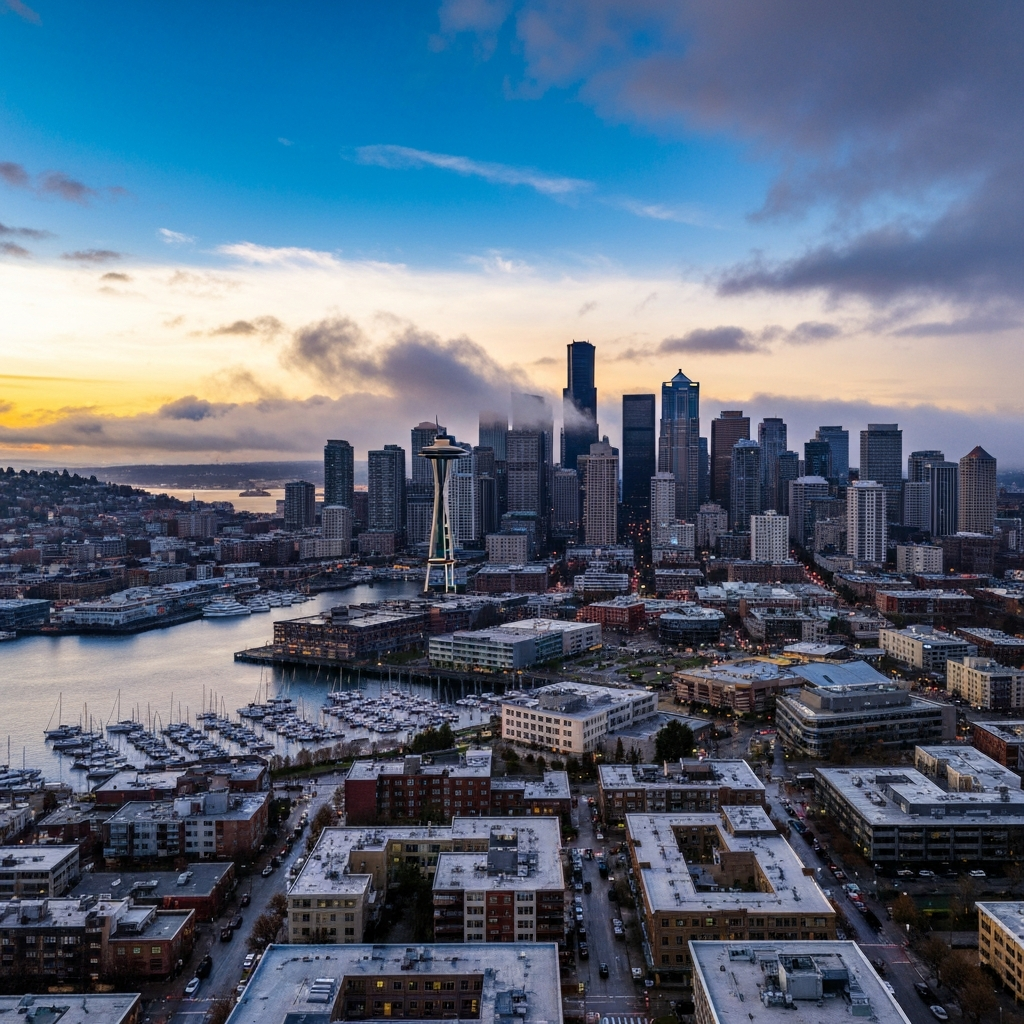
Seattle’s reputation for unpredictable weather is well-earned, thanks in large part to its varied microclimates. The city’s unique topography and proximity to bodies of water result in distinct weather patterns that can change dramatically from one neighborhood to the next.
The Wild Zone
From Green Lake north to Shoreline, the Puget Sound Convergence Zone creates a narrow band of active weather. This area is notorious for heavy rain, hail, lightning, and even snow, caused by colliding winds that journey around the Olympic Mountains.
The Snow Hole
Ballard’s low elevation and proximity to Puget Sound often result in milder conditions during snow events. While surrounding areas may experience snowfall, Ballard frequently remains under cold rain, disappointing snow enthusiasts.
The Wind Tunnel
Husky Stadium at the University of Washington is known for its brisk winds, especially in the exposed north stands. Fans attending games during storm season should prepare for chilly breezes that can make conditions feel even colder.
The Sun Capital
Contrary to Seattle’s rainy reputation, downtown often enjoys drier and sunnier conditions. The higher terrain of West Seattle acts as a barrier, blocking some of the rain headed for the city’s core.
The Snow Belt
West Seattle’s elevated areas can receive snow while lower elevations, like Alki Beach, experience rain. This variation is due to the neighborhood’s higher terrain, which is more susceptible to snowfall during marginal snow events.
The Fog Zone
Drivers traveling from Seattle to Issaquah often encounter dense fog near Eastgate and South Bellevue. The rapid elevation change in this area leads to sudden temperature drops, allowing fog to form quickly.
The Wettest Place
Rainier Beach receives about 40 inches of rain annually, more than any other Seattle neighborhood. Its location, away from the rain-shadowing effects of the Olympic Mountains and near the rising air of the Issaquah foothills, contributes to its wetter conditions.
The Heat Dome
Sea-Tac Airport consistently records higher temperatures during summer. The abundance of asphalt, limited tree cover, and continuous airport activity contribute to this urban heat island effect.
Understanding these microclimates can help residents and visitors better prepare for Seattle’s diverse weather conditions, ensuring a more comfortable and informed experience throughout the city.