

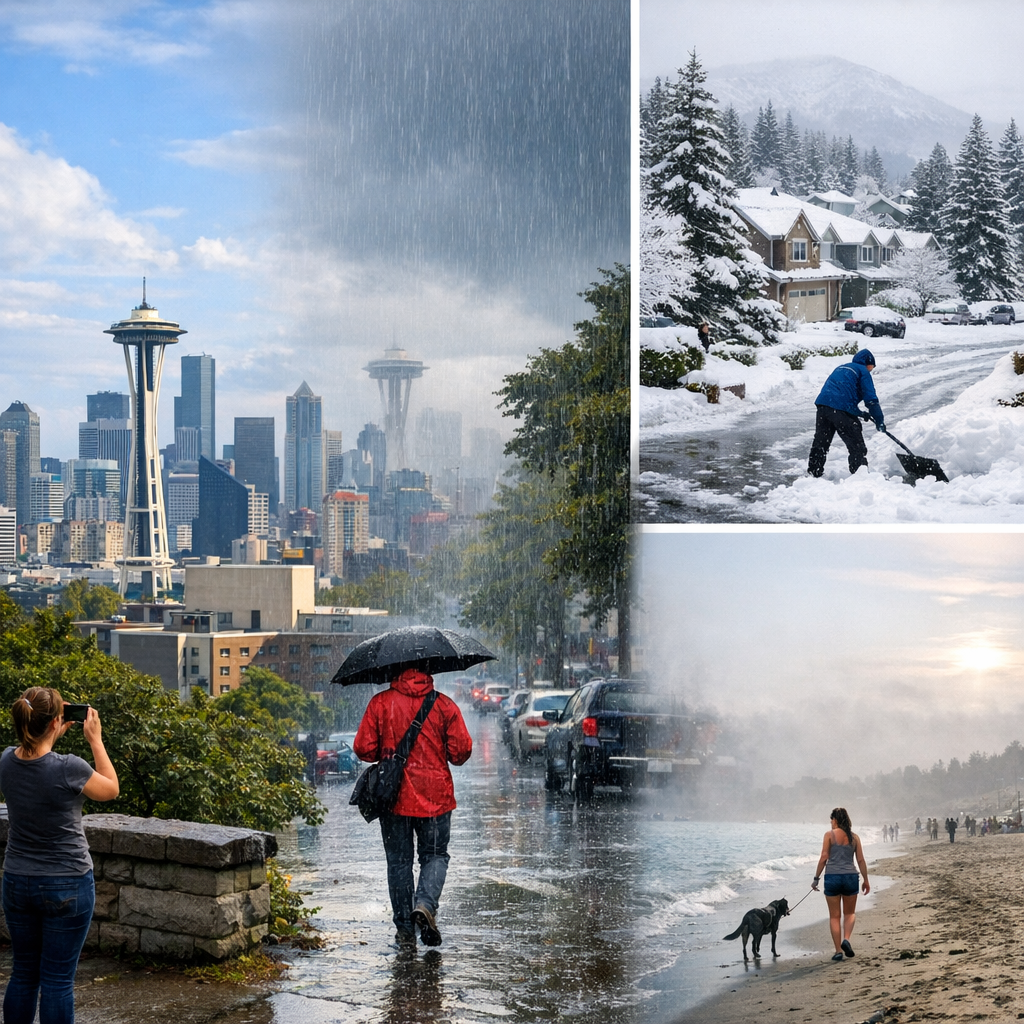
Seattle’s weather is renowned for its variability, a characteristic largely attributed to the city’s diverse microclimates. These localized climate zones result from Seattle’s unique topography, proximity to water bodies, and prevailing wind patterns, leading to distinct weather experiences across different neighborhoods.
The Wild Zone: Green Lake North
From Green Lake north to Shoreline, the Puget Sound Convergence Zone creates a narrow band of active weather. This area is notorious for sudden heavy rain, hail, lightning, and even snow, caused by colliding winds that have traveled around the Olympic Mountains.
The Snow Hole: Ballard
Ballard’s low elevation and proximity to Puget Sound often result in milder winter conditions. During marginal snow events, while surrounding areas may experience snowfall, Ballard typically endures cold rain, disappointing snow enthusiasts.
The Wind Tunnel: Husky Stadium
Attendees at the University of Washington’s Husky Stadium should prepare for brisk conditions. The stadium’s design and location funnel winds through the stands, especially in the exposed north sections, leading to notably chilly experiences during stormy weather.
The Sun Capital: Downtown
Contrary to Seattle’s rainy reputation, the downtown area often enjoys drier and sunnier conditions. The higher terrain of West Seattle acts as a barrier, shielding downtown from some incoming rain, resulting in more frequent sunbreaks.
The Snow Belt: West Seattle
Elevated areas in West Seattle, such as the hilltops, are more likely to receive snow during winter. The increased elevation means that while lower areas may see rain, these higher neighborhoods can experience accumulating snowfall.
The Fog Zone: Eastgate/South Bellevue
Drivers traveling from Seattle to Issaquah often encounter dense fog near Eastgate and South Bellevue. The rapid elevation change in this region leads to temperature drops, creating ideal conditions for fog formation.
The Wettest Place: Rainier Beach
Rainier Beach receives more rainfall annually than any other Seattle neighborhood. Its location, farther from the rain-shadowing effects of the Olympic Mountains and closer to the rising air of the Issaquah foothills, contributes to its higher precipitation levels.
The Heat Dome: Sea-Tac
Sea-Tac Airport consistently records higher temperatures during summer. The abundance of asphalt, limited tree cover, and continuous airport activity contribute to this urban heat island effect.
Understanding these microclimates is essential for residents and visitors alike, as they influence daily activities, commuting, and even clothing choices. Recognizing the nuances of Seattle’s weather patterns can enhance one’s appreciation of the city’s dynamic climate.