

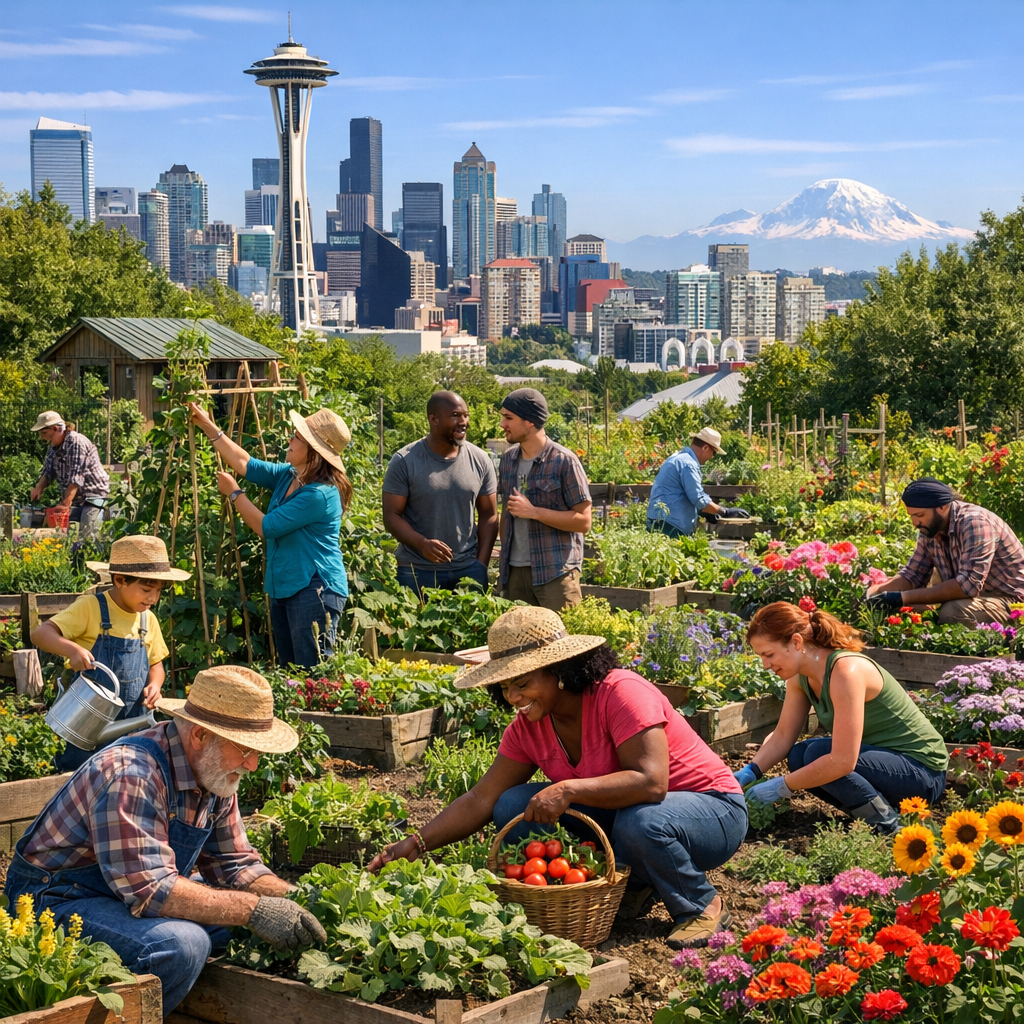
Seattle’s P-Patch Community Gardening Program has been a cornerstone of urban agriculture and community building since its inception in 1973. With over 90 gardens spread throughout the city, these spaces offer residents the opportunity to cultivate organic produce, foster neighborly connections, and contribute to local food security.
A Legacy of Growth
The program began with the Picardo Farm P-Patch, Seattle’s first community garden, established on land once farmed by the Picardo family. Today, the program encompasses nearly 34 acres, serving more than 3,750 gardeners. Each P-Patch is unique, reflecting the character and needs of its neighborhood.
More Than Just Gardening
P-Patch gardens are more than plots of land for growing food. They serve as communal spaces where residents gather, share knowledge, and build lasting relationships. These gardens often host educational workshops, cultural events, and volunteer opportunities, enriching the social fabric of Seattle’s diverse communities.
Addressing Food Security
Many P-Patch gardens dedicate portions of their harvest to local food banks and meal programs. In 2021, volunteers donated over 41,000 pounds of fresh produce to those in need, highlighting the program’s commitment to combating food insecurity in the city.
Getting Involved
For those interested in joining the P-Patch community, the Seattle Department of Neighborhoods provides information on how to sign up for a plot. While some gardens have waitlists, the program continually seeks to expand and accommodate the growing interest in urban gardening.
In a rapidly urbanizing environment, Seattle’s P-Patch gardens stand as vital green spaces that promote sustainability, community engagement, and access to fresh, organic produce. They exemplify how urban agriculture can thrive within a city, fostering connections between people and the land they cultivate.