

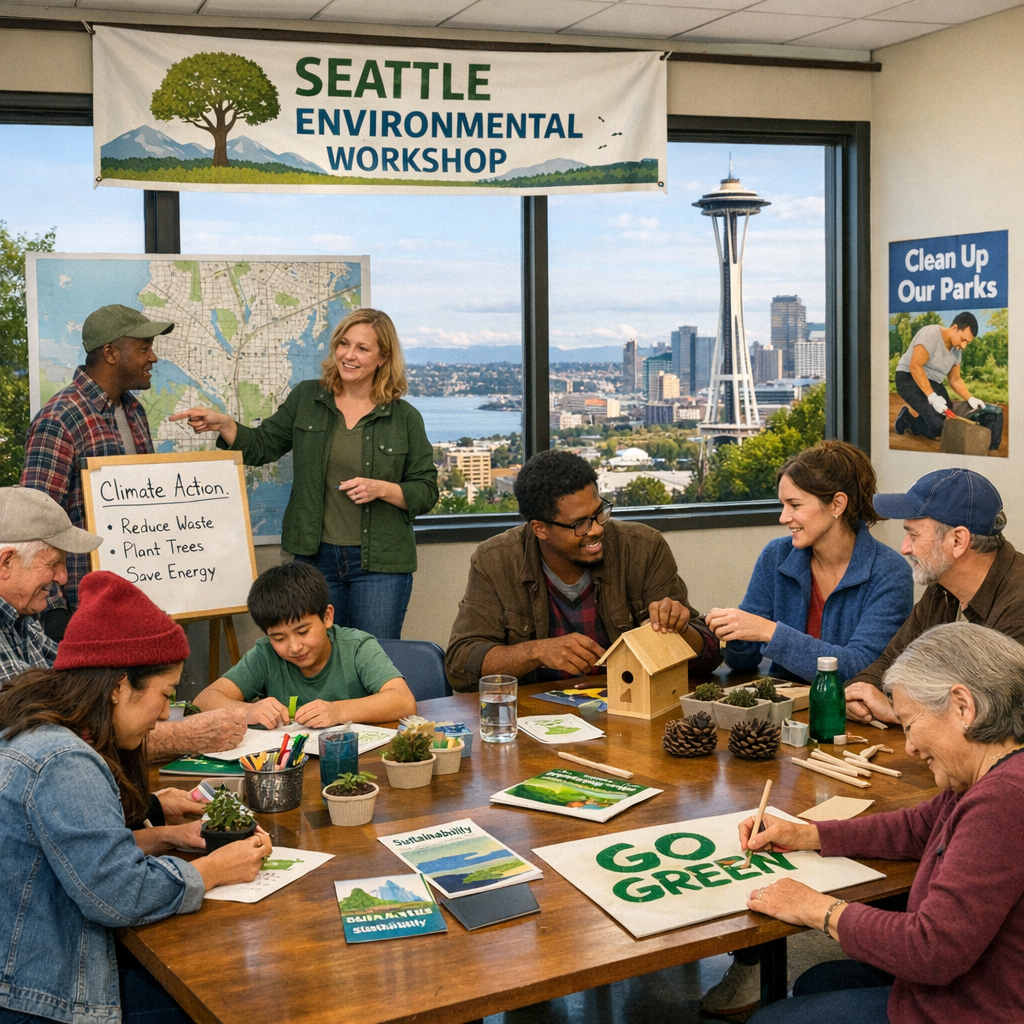
Seattle is actively implementing community-driven strategies to address climate change and promote environmental justice. Recognizing the disproportionate impact of environmental issues on marginalized communities, the city has launched several initiatives to ensure equitable environmental progress.
Equity & Environment Initiative
Established in 2015, the Equity & Environment Initiative (EEI) aims to deepen Seattle’s commitment to race and social justice within environmental work. The EEI focuses on ensuring that all communities benefit from environmental advancements, particularly those historically overburdened by environmental injustices. Key goals include engaging impacted communities in setting environmental priorities and fostering leadership opportunities for people of color, immigrants, refugees, and low-income individuals.
Environmental Justice Fund
To support community-led environmental programs, Seattle’s Environmental Justice Fund invests in projects addressing climate change adaptation, education, and youth leadership. In 2025, the fund supported 12 organizations leading initiatives in communities most affected by environmental and climate inequities. These projects range from marine biology education for youth to climate resilience programs tailored to specific community needs.
Green New Deal
Seattle’s Green New Deal focuses on creating jobs and transitioning from fossil fuels to renewable energy, prioritizing investments in communities most harmed by economic, racial, and environmental injustices. Initiatives under this program include the Building Emissions Performance Standard, which supports building owners in reducing emissions, and the Clean Heat Program, offering rebates for switching from oil to electric home heating.
Thriving Environment Initiative
The Thriving Environment Initiative underscores Seattle Parks and Recreation’s commitment to mitigating climate change impacts, stewarding urban forests, and promoting environmental responsibility. Strategies include restoring urban forests, providing education and workforce training, and planning for tree planting and care in priority neighborhoods like Chinatown-International District and Beacon Hill.
Through these initiatives, Seattle demonstrates a comprehensive, community-focused approach to environmental challenges, ensuring that all residents have a voice in and benefit from the city’s environmental progress.