

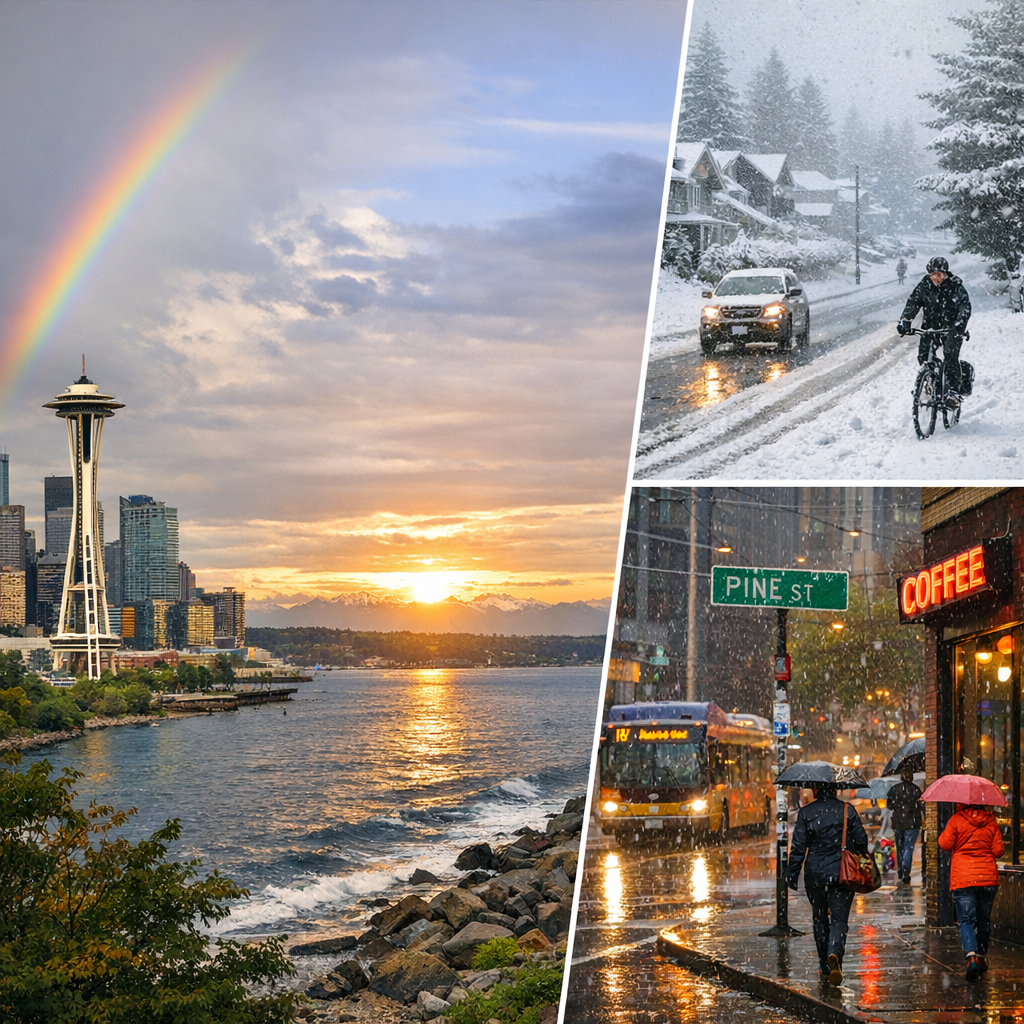
Seattle’s weather is renowned for its variability, often changing from sunshine to rain within a matter of hours. This unpredictability is largely due to the city’s diverse microclimates, influenced by its unique geography and proximity to water bodies.
The Wild Zone
Areas from Green Lake north to Shoreline, extending eastward, are affected by the Puget Sound Convergence Zone. This narrow band of active weather results from winds colliding after traveling around the Olympic Mountains, leading to heavy rain, hail, lightning, and even snow. Residents in these neighborhoods often experience sudden and intense weather changes.
The Snow Hole
In contrast, neighborhoods like Ballard, situated at low elevations near Puget Sound, often miss out on snowfall during marginal snow events. While surrounding areas might be blanketed in snow, Ballard typically experiences cold rain, much to the disappointment of snow enthusiasts.
Coastal Influences
Seattle’s extensive coastline along Puget Sound and Lake Washington moderates temperatures but also contributes to foggy conditions, especially in the mornings. Neighborhoods closer to the water often experience milder temperatures compared to inland areas.
Urban Heat Islands
Urban areas with dense infrastructure, such as downtown Seattle, can become ‘heat islands,’ where temperatures are higher than in surrounding regions. This effect is due to concrete and asphalt absorbing and retaining heat, leading to warmer conditions, especially during summer months.
Understanding these microclimates is essential for residents and visitors alike. It explains why one part of the city might be basking in sunshine while another is under a downpour. Embracing this variability is part of the Seattle experience, so always be prepared for a range of weather conditions.