

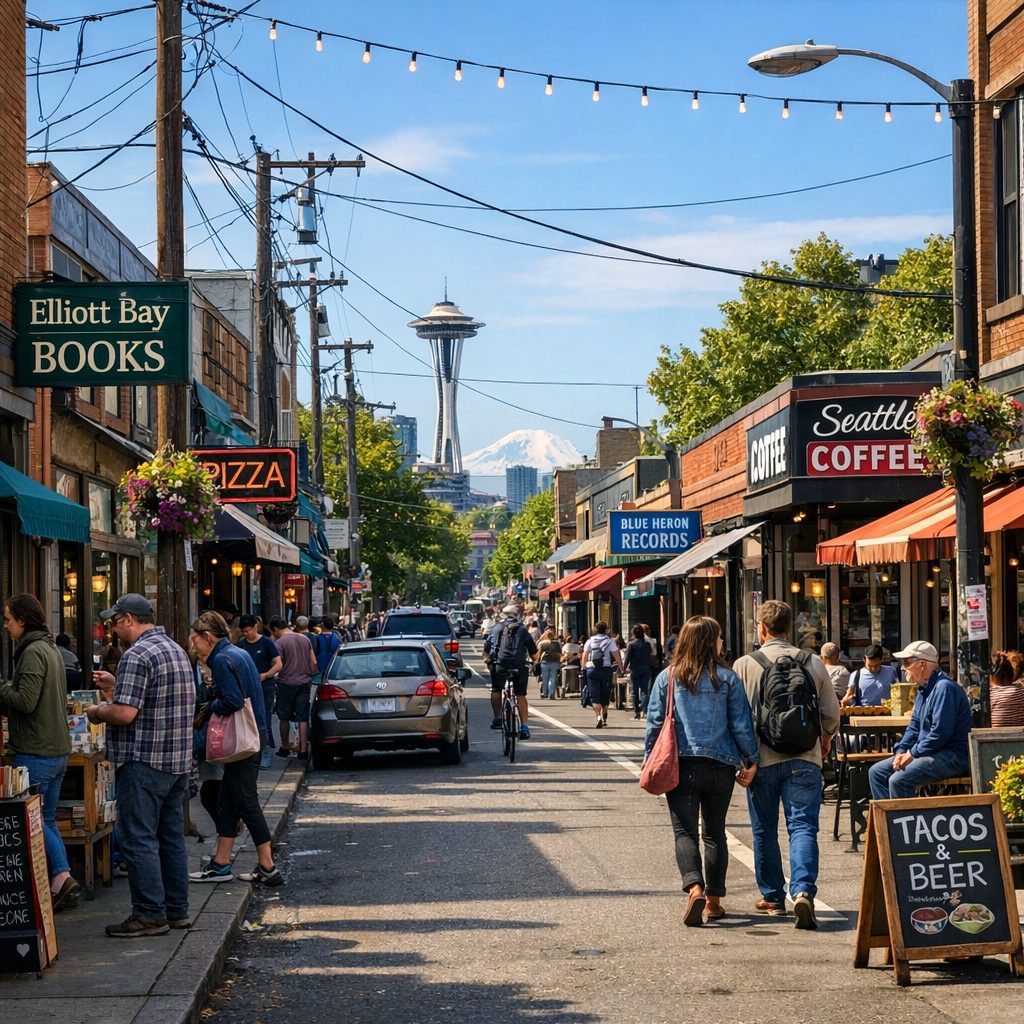
Seattle’s small business community is at a crossroads, grappling with economic challenges while exploring new avenues for growth. Recent surveys indicate that many local businesses are experiencing financial strains, with only 12% reporting sufficient revenue to cover expenses. Factors such as rising operational costs and evolving consumer behaviors contribute to this ‘invisible crisis’ affecting the city’s entrepreneurial landscape.
In response, Seattle has introduced several initiatives to bolster small businesses. The Small Business Expediting Program, for instance, streamlines the permitting process, reducing approval times by 57% and enabling quicker business openings. Additionally, the Capital Access Program offers financial assistance by paying down a portion of loan principals, easing the borrowing burden for eligible businesses.
Community organizations play a pivotal role in supporting entrepreneurs. Ventures, a Seattle-based nonprofit, provides business training, capital access, and coaching, focusing on underrepresented communities. Similarly, the Urban League of Metropolitan Seattle’s Entrepreneurship Community & Cultural Office offers resources and collaborative spaces, particularly emphasizing support for Black, Brown, and Indigenous entrepreneurs.
Recent policy changes also present new opportunities. As of January 2026, Seattle’s updated zoning regulations permit small cafes and markets in residential neighborhoods, aiming to enhance walkability and stimulate local economies. This shift opens doors for entrepreneurs to establish businesses closer to residential areas, fostering community engagement and convenience.
Despite these supportive measures, challenges persist. Some business owners report that current conditions are more demanding than during the pandemic, citing increased costs and changing market dynamics. To navigate this complex environment, leveraging available resources and staying informed about policy developments are crucial for small business resilience and growth.