

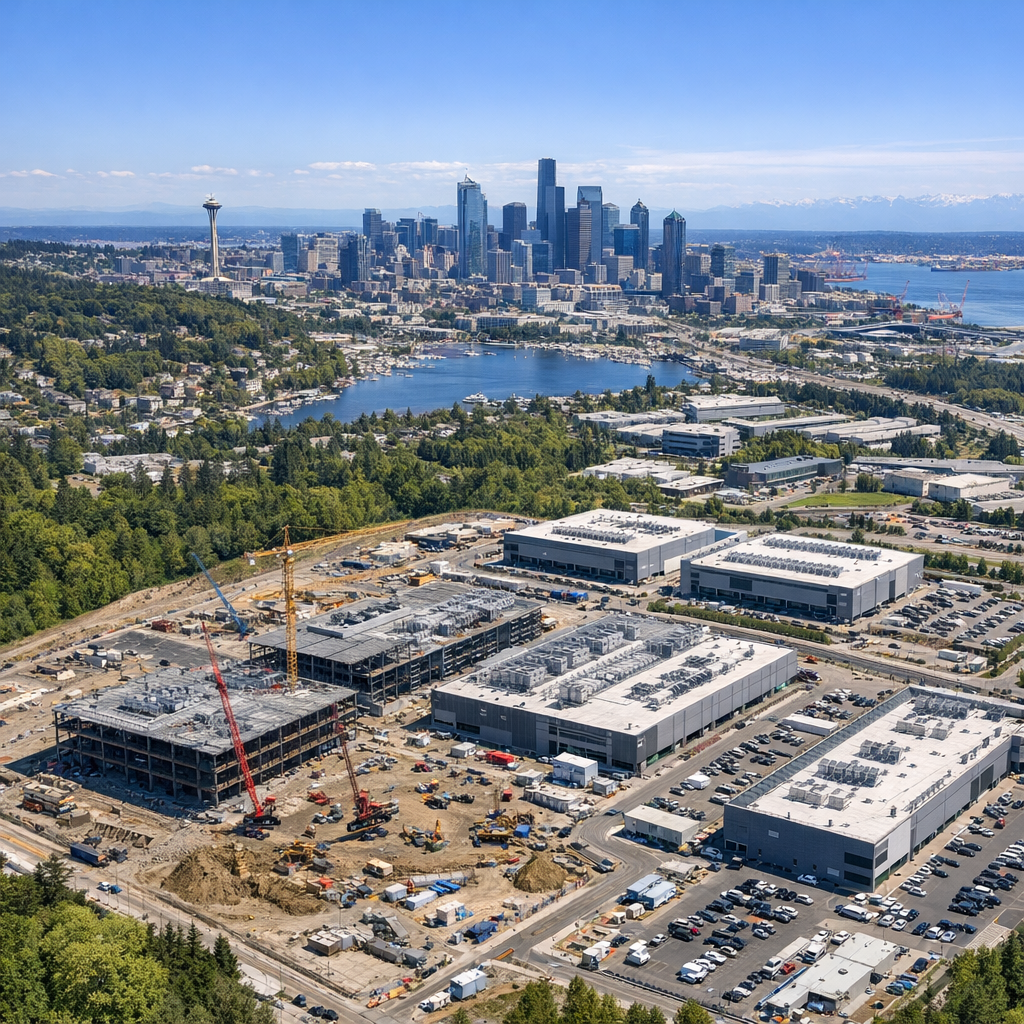
Seattle’s City Council recently voted to impose a year-long moratorium on new large-scale data centers while the city studies their effects on infrastructure, community health, and more. Here’s a rundown of what’s going on, why people are concerned, and what residents should expect.
Why the Pause?
The move comes amid growing concern over the strain that massive data centers place on public systems. Critics point out issues such as high energy consumption, increased utility-bills, noise, air pollution, and potential water usage. Particularly in neighborhoods already weathering environmental burdens, there is a worry that further development without regulation could worsen existing inequalities.
Councilmembers sponsoring the moratorium highlight the need for impact studies covering utility grid reliability, water usage, environmental sustainability, land use, public health, and neighborhood resilience.
What’s the Proposed Action?
The legislation defines “large-load data centers” (for example, those drawing 10 megawatts or more) and suspends approval of new or expanded facilities of that scale for twelve months. The goal is to build a framework so that future developments are sustainable and the community—not just companies—bears the benefits.
Other actions include creating a new Large Load Policy for Seattle City Light, ensuring that costs for electrical infrastructure, sourcing, and maintaining capacity are not shifted onto residents or ratepayers.
Impacts on Infrastructure and Neighborhoods
Seattle’s communities raising voices about this issue warned that infrastructure often lags behind development. For example, narrow or crowded streets, aging utility systems, and limited parks are concerns. Some residents say zoning for more housing or large facilities should come only after upgrades to roads, bridges, and transit.
Seattle City Light has acknowledged that backup generators in data centers—often diesel-powered—can lead to local air quality concerns, which is especially worrying for communities already facing higher pollution.
What Comes Next
The city plans to conduct studies and gather public input. Departments will collaborate to produce policies and guidance so that when the moratorium ends, future data center approvals are guided by clearer standards. This involves community engagement, environmental review, and setting thresholds for where and how large facilities may operate.
For local residents, this is a moment to follow meetings by City Council and Seattle City Light, attend public workshops, and track draft policy proposals. The input provided now can influence how new developments affect neighborhoods’ health, environment, and day-to-day life.
Questions to Watch For
- How and where will load thresholds be set so impacts are distributed fairly?
- What protections will be in place for air quality, noise, and water, especially in historically overburdened areas?
- How will Seattle ensure that utility rate increases don’t unfairly fall on residents?
- Which neighborhoods are likely to see more pressure from proposed facilities and how will they be consulted?
Seattle’s moratorium on new large data centers is designed to pause and reset—not stop all development. With clear policy, community input, and infrastructure upgrades, the city has a chance to steer growth in ways that promote both innovation and equity.